Should Slip Resistance Be Tested Before and After Treatment?
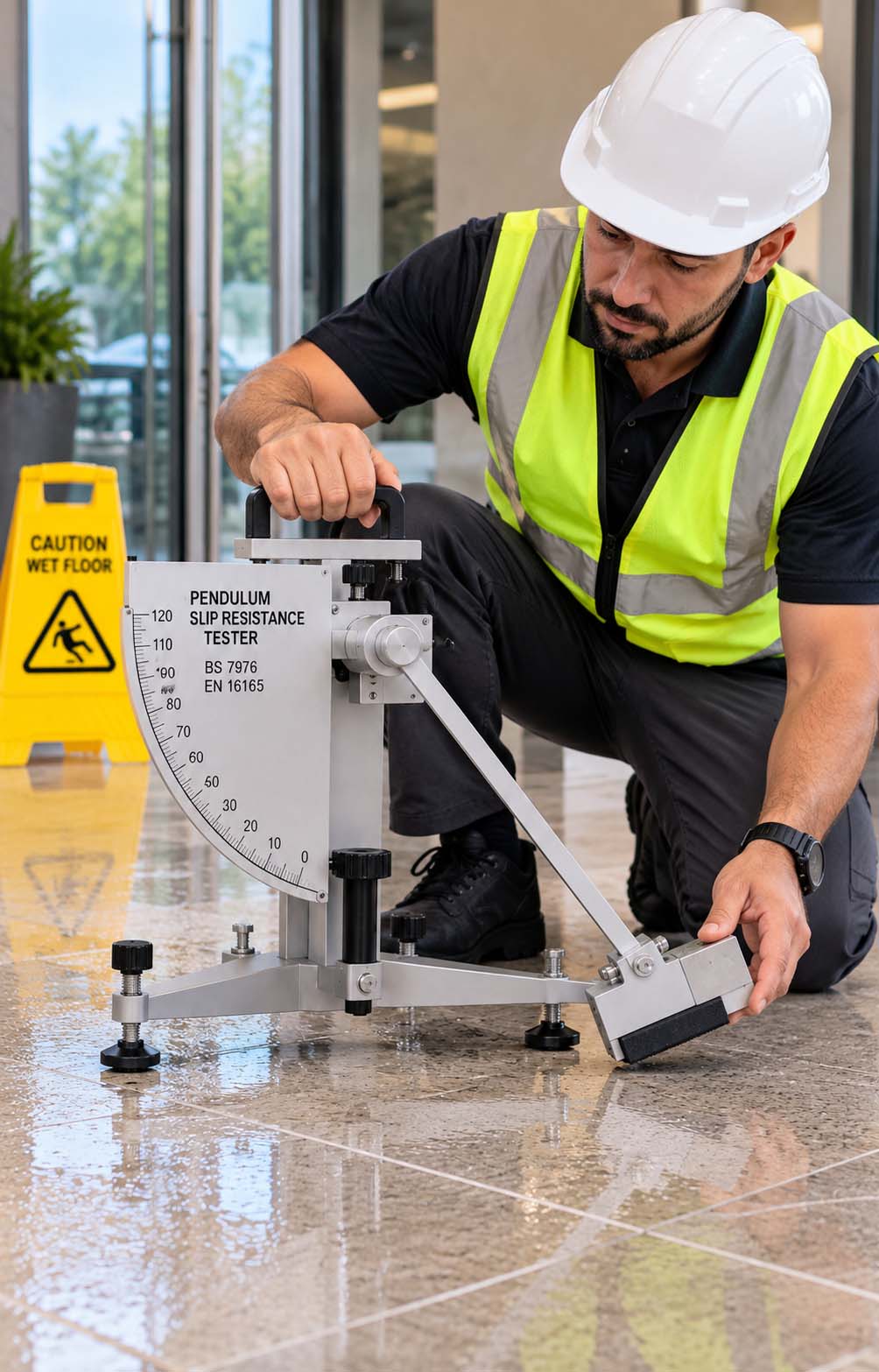
Testing a floor before and after anti-slip treatment can help establish a baseline and evaluate whether the selected process changed surface performance. Whether testing is required depends on the project, site requirements and the purpose of the work, but objective checks can be useful for many commercial applications.
Why test before treatment?
A baseline assessment documents the floor’s condition before work begins. It can help identify differences between locations, compare wet and dry conditions where relevant, and establish whether the concern is consistent across the area. It also helps avoid attributing pre-existing problems to the treatment.
Why test after treatment?
Post-treatment testing can provide evidence about the treated surface under the selected test conditions. It can support handover documentation and help the client understand the result. Testing should be performed using a suitable method by a competent person, with the conditions and locations recorded clearly.
What should a report include?
- Site and exact test locations.
- Surface type and condition.
- Test method and relevant settings.
- Whether the surface was wet, dry or otherwise conditioned.
- Results, limitations and any corrective recommendations.
Does a good result eliminate all risk?
No test can guarantee that slips will never occur. Contamination, footwear, drainage, cleaning and changes in use can alter real-world conditions. Testing is one part of a broader floor-safety process.
GripBooster can discuss suitable slip-resistance assessment and documentation for compatible floors in Dubai and the UAE.